Digital Commerce ScalingFeb 13, 2025

Multi-Channel Product Listing Management: Shopify + Amazon + eBay (Without Losing Your Mind)

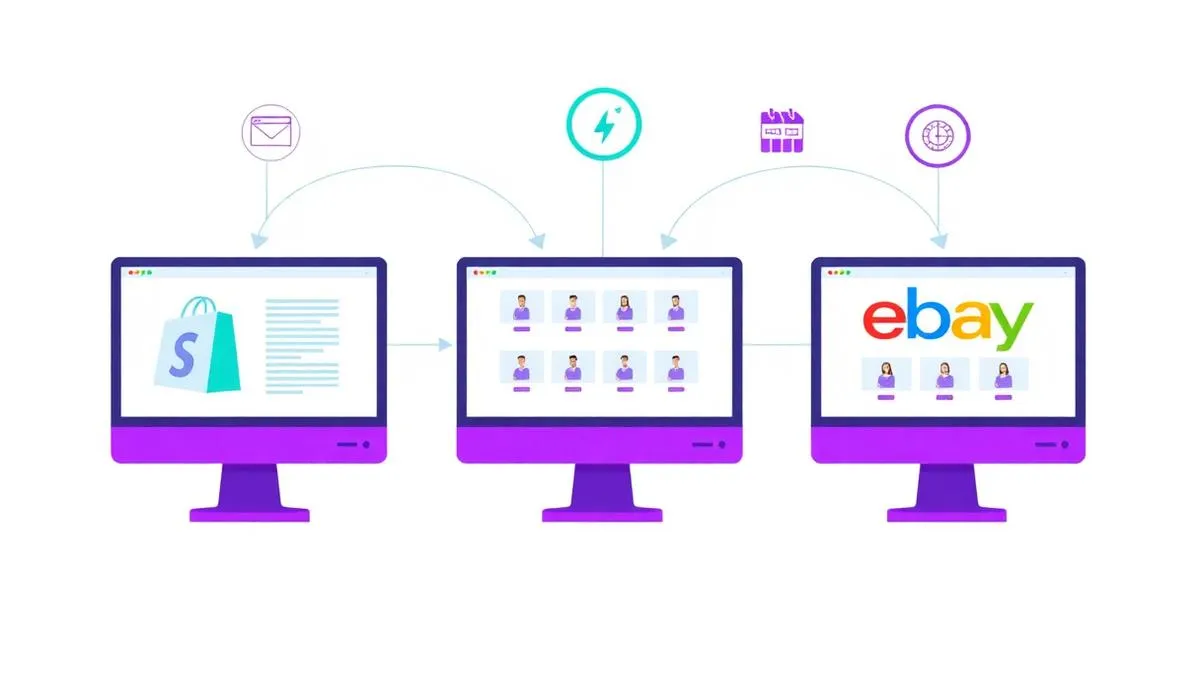
Md Jamrul MiaInfiniCore DataWorks27 min read3,510 wordsUpdated: Jun 8, 2026
Multi-Channel Product Listing Management: Shopify + Amazon + eBay (Without Losing Your Mind)
Md Jamrul Mia — Founder & CEO
By Md Jamrul MiaFounder & CEO
Published: Last updated: 27 min read3,510 words
About the author

In this comprehensive guide, we delve into the world of multi-channel strategies—exploring its significance, benefits, and best practices for effective implementation.

01Mastering Multi-Channel Product Listing Management: The Trifecta of Shopify, Amazon, and eBay Success

In the rapidly evolving e-commerce landscape, relying solely on a single sales channel is equivalent to placing all your resources in one basket. Businesses that aim for sustainable growth and resilience recognize the importance of diversifying their approach. This often leads to the challenge of mastering three dominant platforms: Shopify, Amazon, and eBay. However, managing product listings and inventory across these diverse platforms can quickly spiral into a logistical challenge. This in-depth guide from InfiniCore DataWorks offers valuable insights and actionable strategies for navigating the complexities of multi-channel product listing management effectively.

At InfiniCore DataWorks, we excel in simplifying intricate digital operations. Our extensive experience in data entry, e-commerce operations, web development, and AI automation positions us to help you master the art of selling across multiple platforms. Join us as we unlock the potential of efficient Shopify Amazon eBay management.

02The Case for Multi-Channel: Unveiling the Benefits

Before we dive into the execution, it's essential to comprehend the reasons behind adopting a multi-channel strategy. The advantages it presents are manifold, offering opportunities that single-channel sellers often overlook.

Widened Reach and Diverse Customer Base

Each platform—whether it's Shopify, Amazon, or eBay—caters to unique demographics and shopping behaviors. By establishing a presence on all three, you significantly enhance your brand's visibility and reach a broader array of potential customers. Amazon appeals to convenience-driven shoppers, eBay attracts bargain hunters and niche collectors, while Shopify fosters direct engagement with your brand. This expanded reach is crucial for long-term growth and market presence.

Enhanced Sales Opportunities and Revenue Generation

With more eyes on your products, your potential for sales naturally amplifies. A product that may perform modestly on one platform could emerge as a bestseller on another. By optimizing your listings to align with each channel's specific audience and algorithm, you enhance your chances of conversion and significantly increase your overall revenue.

Mitigated Risk and Diversified Revenue Sources

Consolidating all your sales efforts onto a single platform leaves you exposed to fluctuations in algorithms, policy shifts, or even account suspensions. A multi-channel approach reduces this risk by diversifying your income streams. If sales decline on Amazon, your Shopify or eBay channels can help stabilize your revenue, ensuring business continuity.

Boosted Brand Recognition and Trust

Maintaining a consistent presence across major e-commerce platforms not only builds brand awareness but also instills trust in potential customers. When they see your products listed on multiple reputable sites, it reinforces a perception of reliability and professionalism, thereby enhancing your brand's credibility in the marketplace.

03Understanding the Major Platforms: Shopify, Amazon, and eBay

While Shopify, Amazon, and eBay are all formidable players in the e-commerce sector, they operate on distinct philosophies, fee structures, and audience expectations. Effective product feed management begins with a thorough understanding of each platform.

Shopify: Your Custom Branded Storefront

Shopify empowers you to create a fully branded online store, giving you complete control over your branding, customer data, and the shopping experience. This platform is ideal for establishing a strong brand identity and fostering direct customer relationships.

  • Pros: Full brand control, no marketplace fees, direct customer engagement, customizable design, extensive app ecosystem.
  • Cons: Requires ongoing marketing efforts (SEO, ads), responsible for traffic generation, subscription costs.
  • Best For: Building brand identity, direct-to-consumer (D2C) sales, and offering a unique shopping experience.

Amazon: The Retail Powerhouse

Amazon reigns as the unrivaled leader in online retail, known for its extensive selection, swift shipping, and customer-centric approach. Sellers can leverage Amazon's vast customer base and its robust fulfillment infrastructure (FBA).

  • Pros: Massive built-in audience, high trust factor, FBA logistics, potent search engine.
  • Cons: Intense competition, strict regulations, referral fees, limited branding opportunities, no direct customer interaction.
  • Best For: Reaching a broad market, achieving high-volume sales, and utilizing FBA for logistics.

eBay: The Versatile Marketplace

eBay evolved from an auction site into a diverse marketplace that offers both auction and fixed-price listings. It boasts a global reach and a passionate community of buyers and sellers, particularly for unique or second-hand items.

  • Pros: Global reach, lower fees than Amazon in specific categories, auction format for unique items, direct buyer-seller communication, less stringent branding constraints compared to Amazon.
  • Cons: Perception of lower prices (especially for auctions), competitive landscape for new items, more hands-on customer service required.
  • Best For: Selling niche products, collectibles, refurbished items, global sales, and auction-style selling.

Comparative Overview: Shopify vs. Amazon vs. eBay

Feature Shopify Amazon eBay
Brand Control Complete Limited (via Storefronts/A+ Content) Moderate (store design, listing descriptions)
Audience Size Requires self-generation Massive built-in Large established
Pricing Model Subscription + Transaction Fees Subscription + Referral Fees + FBA Fees Listing Fees + Final Value Fees
Customer Data Full access Limited to order info Accessible for support/feedback
Fulfillment Options Self-fulfillment, 3PL, Shopify Fulfillment FBA (Fulfilled by Amazon), FBM (Fulfilled by Merchant) Self-fulfillment, 3PL, Managed Delivery
Competition Level Against own niche Very High (within product categories) High (especially for common items)

04Navigating the Challenges of Multi-Channel Product Management

While the benefits of a multi-channel approach are evident, managing multiple channels presents its own set of challenges that, if not addressed, can undermine your efforts. This is where InfiniCore DataWorks' expertise in e-commerce operations can prove invaluable.

Inventory Synchronization: A Common Pitfall

One of the most significant challenges is ensuring inventory consistency across all platforms. If you sell out on Shopify but still show items as available on Amazon, it can lead to canceled orders and dissatisfied customers—an easy way to damage your reputation. Poor inventory management can lead to both overselling and underselling scenarios.

Inconsistent Product Information Across Platforms

Each platform has unique requirements regarding product attributes, image sizes, and listing formats. Keeping accurate, updated, and consistent information—including descriptions, prices, and SKUs—across all channels manually can be time-consuming and error-prone. This directly affects your product listing management efficiency.

Navigating Pricing Discrepancies

Creating a dynamic pricing strategy that factors in each platform's fees, competitor pricing, and your desired profit margins can be intricate. Price discrepancies between your channels can confuse customers and erode trust.

Complexities in Order Management and Fulfillment

Processing orders from three different systems necessitates a centralized order management process. Without a unified system, tasks such as processing orders, generating shipping labels, and managing returns can become fragmented and inefficient.

Silos in Reporting and Analytics

Gaining a comprehensive view of your business performance is challenging when sales data is distributed across Shopify, Amazon, and eBay. Analyzing this data to identify trends and make informed decisions requires considerable manual effort or dedicated tools.

05Effective Strategies for Multi-Channel Product Listing Management

listing synchronization and operational excellence.

Centralized Product Information Management (PIM)

A robust PIM system is foundational for a successful multi-channel e-commerce strategy. It acts as a single source of truth for all your product data, encompassing descriptions, images, SKUs, attributes, and variations. This ensures consistency and accuracy across all sales channels.

  • Data Standardization: Establish a universal data structure that meets the requirements of all platforms.
  • Rich Content: Optimize product descriptions and images for each channel while maintaining core information.
  • Automated Updates: PIM systems can automatically push updates to all connected channels, minimizing manual workload.

Automated Inventory Management

Implementing inventory automation is essential. When an item sells on one platform, its stock level must instantaneously update across all channels. This prevents overselling and ensures accurate stock counts.

  • Real-time Sync: Utilize software that provides real-time or near-real-time inventory synchronization.
  • Buffer Stock: Maintain a small buffer stock across channels to accommodate slight delays in synchronization.
  • Master Stock: Identify one system (e.g., your PIM or ERP) as the primary inventory source.

Streamlined Order Fulfillment

Integrating order management systems (OMS) is critical. All orders from Shopify, Amazon, and eBay should funnel into a single dashboard for processing.

  • Consolidated Dashboard: Manage all orders from one interface for efficiency.
  • Automated Shipping: Create shipping labels and tracking numbers directly from your OMS.
  • Returns Management: Establish a clear and consistent returns policy across all channels, managed centrally.

Utilizing Dynamic Pricing and Repricing Tools

To stay competitive and profitable, prices must be adjusted dynamically based on market conditions, competitor pricing, and platform fees.

  • Algorithmic Pricing: Employ tools that analyze market data and automatically adjust prices.
  • Profit Margin Protection: Set minimum price thresholds to safeguard profitability.
  • Channel-Specific Pricing: Take into account different fee structures when determining prices for each platform.

06Selecting the Right Multi-Channel Management Software

The tools you choose can significantly impact the success of your multi-channel strategy. Below are key features to look for in product feed management and listing synchronization solutions.

Essential Features to Consider

  • Integrations: Must seamlessly connect with Shopify, Amazon, and eBay (as well as other potential channels).
  • Inventory Synchronization: Reliable, real-time synchronization across all platforms.
  • Listing Management: Centralized creation, editing, and optimization of product listings.
  • Order Management: Streamlined order processing and fulfillment workflows.
  • Reporting & Analytics: A unified view of sales, inventory, and customer data.
  • Pricing Automation: Repricing capabilities and dynamic pricing algorithms.
  • Scalability: Ability to expand with your business and incorporate additional channels/products.
  • Support: A responsive customer support team and a robust knowledge base.
Software Key Strengths Ideal For
ChannelAdvisor Comprehensive reporting, extensive marketplace support. Large enterprises, complex operations, high-volume sellers.
Sellbrite User-friendly interface, strong inventory and listing management, suitable for SMBs. Small to medium businesses seeking ease of use.
Veeqo (by Amazon) Seamless Amazon integration, excellent shipping and warehouse tools, free for FBA sellers. Amazon-centric sellers with complex shipping needs.
Linnworks Highly customizable, powerful automation, strong for international selling. Businesses with unique workflows and an international focus.
ShipStation Specialized in shipping and fulfillment, integrates with most platforms and carriers. Businesses focusing on consolidating shipping challenges.

Insight from InfiniCore DataWorks: The "best" solution is highly contingent on your specific business size, complexity, and budget. We frequently assist clients in conducting needs assessments and vendor selection processes to ensure the right fit. Our expertise in web development and AI automation also supports the integration of chosen tools with existing systems or the creation of custom solutions.

07Case Study: Trailblazer Tech - Mastering Multi-Channel Selling

Let’s take a closer look at a practical example: Trailblazer Tech, a small electronics retailer specializing in niche outdoor gadgets, initially sold exclusively through Shopify.

Identifying the Challenge

Despite a strong brand and solid website SEO, Trailblazer Tech faced stagnating sales. They recognized that their target audience also frequented Amazon for convenience and eBay for unique finds. Their manual listing approach on Amazon and eBay led to:

  • Frequent inventory discrepancies, causing overselling issues.
  • Inconsistent pricing across platforms, resulting in customer complaints.
  • Significant time spent manually entering product data, leading to errors.
  • Delayed fulfillment due to disjointed order management.

The InfiniCore DataWorks Solution

InfiniCore DataWorks partnered with Trailblazer Tech to implement a comprehensive multi-channel strategy. Our solutions included:

  • Integrating a PIM System: Centralized all product data, including detailed specifications, high-resolution images, and optimized descriptions tailored for each platform.
  • Deploying a Multi-Channel Hub: Connected Shopify, Amazon Seller Central, and eBay to a unified platform (e.g., Sellbrite).
  • Automating Inventory Sync: Configured real-time inventory updates to ensure accurate stock levels across all three channels.
  • Standardizing Listing Templates: Developed templates for Amazon and eBay that automatically pulled data from the PIM, reducing manual entry and ensuring consistency.
  • Streamlining Order Flow: Consolidated all orders into the multi-channel hub, allowing Trailblazer Tech to manage shipping labels and tracking from a single interface.

Measurable Results

Within six months of implementation, Trailblazer Tech experienced:

  • 45% Increase in Overall Sales: Tapping into Amazon and eBay's audiences significantly boosted revenue.
  • 99% Inventory Accuracy: Overselling incidents decreased to near zero, enhancing customer satisfaction.
  • 70% Reduction in Manual Data Entry: Staff could focus on marketing and customer service rather than tedious data tasks.
  • Improved Customer Reviews: Faster, more accurate fulfillment resulted in higher satisfaction scores across all platforms.

This case study exemplifies the transformative impact of effective multi-channel product listing and operational management.

08Workflow: Launching a New Product Across Shopify, Amazon & eBay

A well-defined workflow is essential for efficiency and accuracy. Below is a simplified outline incorporating best practices for launching a new product across multiple channels:

Phase 1: Product Data Preparation (Creating the Master Record)

  1. Centralized Data Entry: Enter all raw product data (SKU, title, description, features, dimensions, weight, manufacturer, etc.) into your PIM or master spreadsheet.
  2. High-Quality Media: Upload all images (multiple angles, lifestyle shots, infographics) and videos to your PIM. Ensure they meet the highest resolution/size requirements of all platforms.
  3. Keyword Research: Conduct thorough keyword research tailored to your product, considering broad terms for Amazon/eBay searches and specific terms for Shopify SEO.
  4. Create Base Descriptions: Write a comprehensive, SEO-rich product description template that can be easily adapted for each channel.
  5. Define Attributes & Variations: Clearly outline all product attributes (color, size, material) and set up variations within your PIM.

Phase 2: Platform-Specific Optimization and Listing

  1. Start with Shopify (Ideal for Brand Control):
    • Create the product listing in Shopify using your rich content and base description.
    • Optimize the title and description for your store's SEO.
    • Assign the product to relevant collections and tags.
    • Set initial pricing and inventory.
  2. Amazon Listing (Adhering to Strict Guidelines):
    • Utilize your multi-channel connector to pull data from your PIM/Shopify.
    • Crucial: Adapt the title and bullet points to Amazon's keyword-rich format.
    • Utilize A+ Content for enhanced brand storytelling if available.
    • Set competitive FBA/FBM pricing, factoring in Amazon's fees.
    • Ensure precise category selection.
  3. eBay Listing (Leveraging Flexibility):
    • Pull data via your connector.
    • Optimize the title and description for eBay's search and audience (e.g., mention condition, brand, and specific collectible terms).
    • Choose the listing format (fixed price vs. auction).
    • Set pricing, considering eBay's fees and competitive factors.
    • Specify shipping options and return policy.
  4. Review & Publish:
    • Thoroughly review each listing on its respective platform for accuracy and formatting.
    • Publish the listings.

Phase 3: Ongoing Management and Optimization

  1. Monitor Inventory: Regularly check your multi-channel dashboard for synchronization issues.
  2. Address Orders Centrally: Process all orders via your OMS, ensuring timely fulfillment.
  3. Customer Service: Respond to inquiries on each platform while tracking common issues centrally if possible.
  4. Performance Analysis: Leverage your unified analytics to monitor sales, conversion rates, and customer feedback across all channels.
  5. Iterative Optimization: Based on performance data, continually refine product titles, descriptions, images, and pricing for each channel.

"AI automation from InfiniCore DataWorks can significantly enhance this workflow. Imagine AI assisting in drafting platform-specific descriptions, analyzing competitor pricing, or even predicting inventory needs across channels. This represents the future of efficient e-commerce."

09Beyond Listings: Multi-Channel Marketing and Customer Engagement

Effective multi-channel management transcends the mere act of listing products; it requires a holistic approach to customer engagement and marketing.

Establishing Consistent Brand Messaging

Even though Amazon and eBay impose strong branding limitations, ensure that your product imagery, descriptions, and customer service tone align with your established brand identity on Shopify. Consistency fosters trust among your audience.

Utilizing Customer Feedback

Gather and analyze reviews and feedback from all platforms. Use this data to refine products, improve listings, and enhance your overall customer experience. Be proactive in responding to all reviews, whether positive or negative.

Implementing Cross-Promotion Strategies

While direct cross-promotion (e.g., linking from Amazon to Shopify) may contravene marketplace terms, you can adopt indirect strategies:

  • Packaging Inserts: Include a branded insert with orders that encourages customers to visit your Shopify store for exclusive offers or product registration.
  • Social Media: Drive traffic to your Shopify store via social media while showcasing products available on Amazon and eBay.
  • Email Marketing: Build an email list from your Shopify customers, using it for newsletters, new product announcements, and promotions that direct them to your preferred sales channel.

10The Role of InfiniCore DataWorks in Your Multi-Channel Journey

Successfully navigating the intricacies of multi-channel e-commerce requires specialized expertise. InfiniCore DataWorks serves as your strategic partner, offering a suite of services designed to optimize your operations.

Data Entry and Cleansing

Accurate and standardized product data forms the cornerstone of multi-channel success. Our data entry services ensure your product information is pristine, consistent, and ready for any platform, eliminating errors that could hinder your listings.

E-commerce Operations Management

From establishing your multi-channel integrations to managing daily order fulfillment and inventory, our e-commerce operations team can handle the heavy lifting, allowing you to focus on growth and strategy. We ensure smooth listing synchronization and efficient workflows.

Web Development and Integration

If you need a custom solution to bridge gaps between your platforms, our web development experts can create bespoke integrations, custom PIM systems, or API connectors to ensure seamless communication between all your chosen e-commerce tools.

Harnessing AI Automation Solutions

Capitalize on the potential of AI automation for dynamic pricing, automated content generation (e.g., tailoring product descriptions for different platforms), intelligent inventory forecasting, and advanced analytics. AI can transition your multi-channel product listing management from a reactive to a proactive approach.

"Our objective at InfiniCore DataWorks is to turn your multi-channel challenges into competitive advantages, ensuring your products are consistently available where your customers are, with accurate data and optimized for maximum impact."

If you're seeking more expert insights and tools to grow your business, explore these curated resources:

12Frequently Asked Questions About Multi-Channel Product Listing Management

How challenging is it to manage Shopify, Amazon, and eBay listings simultaneously?

Without the appropriate tools and strategies, managing these listings can be exceptionally challenging, resulting in inventory errors, inconsistent data, and operational inefficiencies. However, with the right multi-channel management software and a clear workflow, it becomes significantly more manageable and profitable.

What is multi-channel product listing, and why is it important?

Multi-channel product listing refers to selling your products across various online sales platforms (like Shopify, Amazon, and eBay). It's crucial because it broadens your market reach, diversifies your revenue streams, reduces dependency on a single platform, and enhances brand visibility.

Can I use the same product description for all three platforms?

While the core information should remain consistent, it's advisable to optimize product descriptions for each platform. Amazon favors keyword-rich bullet points and A+ content, eBay benefits from detailed HTML descriptions for niche markets, and Shopify allows for robust branding and storytelling. Generic descriptions miss out on opportunities for engagement.

What are the biggest risks of not using a multi-channel management tool?

The most significant risks include overselling (leading to canceled orders and negative reviews), inconsistent pricing, manual data entry errors, fragmented order fulfillment, and an inability to accurately track overall business performance. These factors can damage your reputation and impact profitability.

How does InfiniCore DataWorks assist with multi-channel product management?

InfiniCore DataWorks supports you with data entry and cleansing, the setup and management of e-commerce operations, custom web development for integrations, and the implementation of AI automation for tasks like dynamic pricing and content optimization. We provide end-to-end support to streamline your multi-channel strategy.

Is Shopify necessary if I'm selling on Amazon and eBay?

While not strictly necessary, Shopify is highly recommended for building your own brand, controlling customer data, and establishing a direct-to-consumer channel independent of marketplace rules. It serves as your brand's foundation in a multi-channel strategy.

What is listing synchronization, and why is it critical?

Listing synchronization is the process of automatically updating product information (such as inventory levels, prices, and descriptions) across all your connected sales channels in real-time or near-real-time. It's critical for preventing overselling, maintaining accurate pricing, and ensuring data consistency, which are vital for customer satisfaction.

How can AI automation enhance my multi-channel strategy?

AI automation can significantly boost efficiency by automating tasks like dynamic pricing adjustments, generating platform-specific product descriptions, forecasting inventory needs, identifying top-performing keywords, and providing advanced sales analytics. This allows human resources to focus on more strategic tasks and enhances overall decision-making.

13Conclusion: Embracing the Future of Multi-Channel, Automated, and Integrated Selling

The journey toward mastering multi-channel sales—especially across the powerhouse trio of Shopify, Amazon, and eBay—is fraught with challenges. Nevertheless, the rewards—expanded reach, increased sales, and reduced risk—are well worth the effort. By embracing centralized data management, automation, integration, and a strategic mindset, your business can significantly enhance its multi-channel product listing capabilities.

At InfiniCore DataWorks, we are dedicated to simplifying this journey for you. Our expertise in data entry, e-commerce operations, web development, and AI automation provides the essential support for seamless Shopify Amazon eBay management. Let us partner with you to build a robust, scalable multi-channel ecosystem that drives growth and propels your business forward in the digital age. Don't just sell—sell everywhere, intelligently.

Md Jamrul Mia

Md Jamrul Mia

Founder, InfiniCore DataWorks · Senior E-commerce & Data Specialist

10+ years of freelancing experience and 500+ projects delivered for clients across the US, UK, Canada, Australia & Europe. Top Rated on Upwork (4.9★) and 5.0 on Fiverr — specializing in data entry, web scraping, e-commerce operations, AI automation, and web development.

Comments (0)

No comments yet — be the first to share your thoughts.

Leave a Comment

Comments are moderated before they appear.